
Floors That Handle Real Facility Demands
Industrial Floor Coatings in Painesville for facilities facing daily equipment wear and chemical exposure
4Six Epoxy installs industrial coating systems in Painesville that protect concrete from heavy machinery, forklift traffic, and chemical spills that occur in warehouses and manufacturing facilities. These coating systems bond to properly prepared concrete to create a surface that withstands impact from dropped materials, abrasion from continuous equipment movement, and chemical contact from oils, solvents, and cleaning agents. You need this protection when your facility operates equipment that generates point loads exceeding standard floor ratings or when production processes involve substances that penetrate and degrade untreated concrete.
The coating process involves diamond grinding the concrete to create a profiled surface, repairing any existing cracks or spalling, and applying a multi-layer epoxy system formulated for high-traffic industrial use. Each layer serves a specific function: the primer penetrates the concrete substrate, the body coat provides thickness and chemical resistance, and the topcoat delivers abrasion resistance and cleanability. The system thickness and chemical composition vary based on the specific loads and substances your floor encounters daily.
Schedule an industrial flooring assessment to evaluate your facility's traffic patterns and exposure conditions.
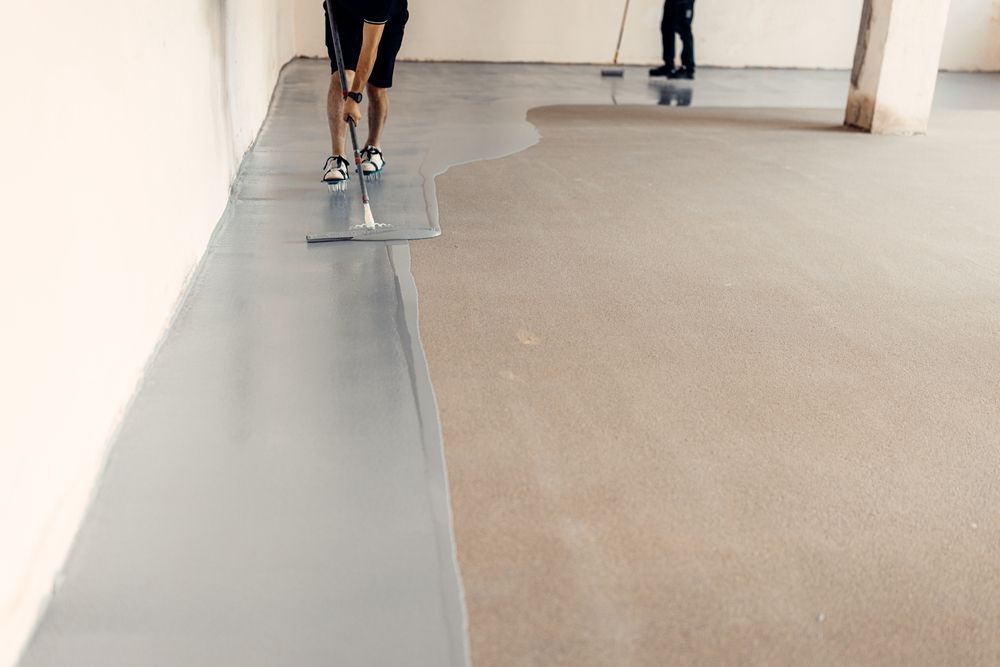
What Industrial Coating Systems Actually Accomplish
The coating creates a monolithic surface that prevents oils and chemicals from penetrating the concrete substrate, which stops the internal deterioration that causes concrete to spall and crack under load. Proper preparation removes surface laitance and opens the concrete pores, allowing mechanical bonding that withstands the lateral forces generated when forklifts turn or equipment vibrates during operation. The chemical formulation resists breakdown from battery acid, hydraulic fluid, and industrial cleaners that contact the floor throughout production shifts.
Once the system cures, you'll notice that spills no longer leave permanent stains, cleaning requires less time because contaminants remain on the surface rather than soaking into porous concrete, and dust generation decreases because the coating seals the concrete rather than allowing surface particles to release. The floor maintains its slip resistance even when wet, and forklift tires no longer leave black marks that accumulate over time. Your facility gains a surface that maintains its appearance and function under conditions that would degrade untreated concrete within months.
Industrial coating systems include anti-slip additives when floor areas experience regular water exposure or when OSHA standards require specific coefficient of friction ratings. The system does not eliminate existing substrate issues like vapor transmission from below-grade concrete or structural cracks caused by settling, which require separate remediation before coating application. Installation timing depends on temperature and humidity because the chemical cure process requires specific environmental conditions to achieve full cross-linking.
What Facility Managers Usually Ask
Industrial floor coatings require specific conditions before and during installation to achieve the performance standards your facility demands.
What preparation does concrete need before coating application?
The concrete surface undergoes diamond grinding to remove existing coatings, oils, and laitance, then gets profiled to a specific roughness measured by concrete surface profile standards, which creates the texture necessary for mechanical bonding between the substrate and the primer coat.
How do coatings resist the chemicals used in our facility?
The epoxy formulation includes chemical-resistant polymers that prevent penetration from oils, acids, alkalis, and solvents, with the specific resistance level depending on the concentration and contact duration of the substances your production process uses.
When can we resume operations after installation?
Foot traffic typically becomes possible within 24 to 48 hours depending on temperature, while full equipment loads and chemical exposure should wait until the coating reaches full cure, which varies based on the system thickness and ambient conditions during installation.
What makes industrial coatings different from standard garage coatings?
Industrial systems use higher solids content, thicker application rates, and chemical formulations engineered for continuous heavy loads rather than intermittent vehicle traffic, which produces a surface that maintains integrity under the point loads and impacts common in manufacturing and warehouse environments.
How does the Ohio climate affect coating performance?
Temperature and humidity in Painesville during application determine cure times and final bond strength, which is why installations typically avoid periods when facility heating or ventilation cannot maintain the temperature and moisture ranges required for proper chemical cross-linking.
4Six Epoxy evaluates your facility's specific operational demands and exposure conditions to recommend the coating system that matches your performance requirements. Request a detailed assessment to review your floor's current condition and determine the preparation work needed before installation.