
Outdoor Spaces That Handle Weather Exposure
Patio Coatings in Painesville for concrete surfaces showing wear from moisture, temperature swings, and continuous outdoor use
Concrete patios develop surface roughness and staining from constant exposure to rain, snow, and UV radiation that bare slabs cannot resist long-term. The porous surface traps dirt, algae grows in shaded areas that stay damp, and seasonal freeze-thaw action causes the top layer to flake away gradually each year. 4Six Epoxy applies patio coatings that seal the concrete against these conditions while offering decorative finishes and slip-resistant textures suited to outdoor living areas, pool surrounds, and gathering spaces where appearance and safety both matter.
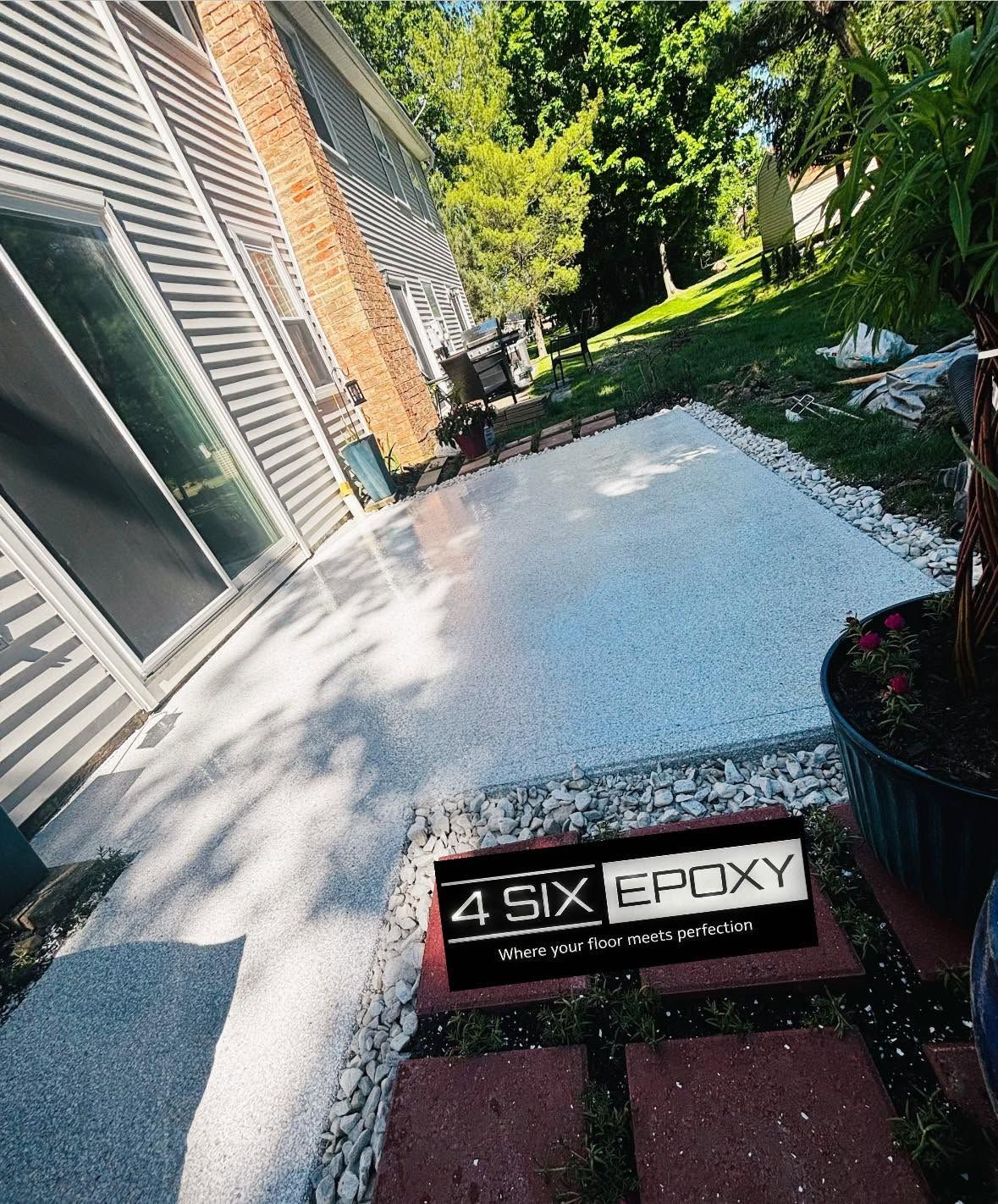
Installation begins with cleaning and repairing the existing concrete to address cracks, stains, or surface damage that would show through the coating or compromise adhesion. The concrete is ground to remove algae, dirt, and weathered material, then coating systems designed for exterior exposure are applied with slip-resistant additives that maintain traction when the surface is wet. Finish options include solid colors that brighten shaded areas or decorative flakes that add visual texture and complement surrounding landscaping.
Request an estimate to evaluate your patio and discuss coating systems appropriate for your outdoor space.
What Proper Installation Requires
Exterior coatings must bond securely to concrete that expands and contracts with temperature changes and remains exposed to UV radiation that degrades some coating chemistries over time. Surface preparation removes the weak, weathered layer of concrete where freeze-thaw damage has already loosened the material, exposing sound concrete that provides a stable base for coating adhesion. Coatings formulated for outdoor use include UV stabilizers that prevent yellowing and chalking under direct sunlight.
After the coating cures, your patio becomes a sealed surface that water runs off instead of soaking into, preventing the moisture absorption that leads to freeze damage and surface deterioration. The slip-resistant texture provides secure footing even when wet from rain or pool splash-out, and the sealed surface prevents dirt and organic growth from penetrating into the concrete where it cannot be fully removed. Routine cleaning with a garden hose or pressure washer keeps the patio looking maintained without the scrubbing required to clean bare concrete.
Coated patios handle foot traffic, outdoor furniture, and normal use without showing rapid wear, but metal furniture legs dragged across the surface or sharp impacts from dropped objects can damage the coating layer. Periodic inspection and touch-up of high-wear areas maintains the protective barrier and extends the time before full recoating becomes necessary.
Answers to Frequent Service Questions
Outdoor concrete performs differently than interior floors due to weather exposure and variable moisture conditions throughout the year.
What makes a coating slip-resistant for pool areas and wet surfaces?
Aluminum oxide or silica aggregate is broadcast into the topcoat while it is still wet, creating a textured surface that increases traction without being uncomfortable underfoot when walking barefoot.
How do coatings hold up to freeze-thaw cycles in Painesville winters?
Exterior-grade polyaspartic and urethane coatings flex with temperature changes and prevent water from entering the concrete surface, which reduces freeze-thaw damage as long as the underlying slab remains structurally sound without major cracking.
Why does algae grow on some patios but not others?
Shaded areas that stay damp and north-facing surfaces that receive less direct sunlight retain moisture longer, creating conditions where algae and mildew thrive on porous concrete, while coated surfaces resist organic growth because moisture does not penetrate.
When should patio coating be avoided due to weather conditions?
Installation requires dry conditions with temperatures above 50 degrees and no rain forecast for at least 24 hours, along with low humidity to allow proper curing before moisture exposure.
What color options work best for patios exposed to full sun?
Lighter colors reflect heat and stay cooler underfoot during summer, while darker tones absorb more heat but hide dirt and stains more effectively in high-traffic areas near grills or seating.
4Six Epoxy evaluates your patio's condition and explains how different coating systems perform under the specific exposure your outdoor space experiences. Schedule a consultation to review finish options and receive a project estimate tailored to your property.